How to Support a Healthy Balance of Mouth Bacteria
We may earn a commission when you buy through links on this page, at no extra cost to you. Learn more
You can't wipe out mouth bacteria, and you wouldn't want to. The goal is balance. Brush twice daily with fluoride toothpaste, clean between teeth, scrape your tongue, space out sugar, keep saliva flowing and avoid smoking. Oral probiotics are an optional extra with limited evidence. Symptoms that don't settle need a dentist.
ProDentim: A chewable probiotic supplement marketed for teeth, gums, and oral bacterial balance.
Visit the official ProDentim site60-day money-back guarantee

On this page
- What does a balanced mouth microbiome mean, and what are the signs it is off?
- How do you reduce harmful bacteria with brushing, flossing and tongue care?
- Does mouthwash help or harm your oral bacteria?
- What should you eat and drink to support good bacteria?
- Do oil pulling and herbs really work?
- Where do oral probiotics fit?
- Can you reset your oral microbiome, and how long does it take?
- How does this connect to the bigger picture of mouth bacteria?
What does a balanced mouth microbiome mean, and what are the signs it is off?
A balanced oral microbiome is a mixed community of bacteria and other microbes that lives in your mouth without causing harm. The aim is balance, not a sterile mouth.
These microbes live in a sticky layer called biofilm (plaque is the biofilm on teeth). A review of the oral microbiome says diet, smoking and medical conditions can tip the mix into dysbiosis, which just means an imbalance. That can go with cavities, gum disease and bad breath.
Signs of imbalance: which are specific and which are general
No single sign proves your mouth bacteria are off, because most signs have several causes.
- Persistent bad breath (general; many causes)
- A coated tongue (general)
- Bleeding or swollen gums (more specific to gum inflammation)
- Frequent cavities (more specific to acid-producing bacteria and diet)
- Dry mouth (a risk factor more than a sign)
Links to diabetes and heart disease are associations seen in research, not proof of cause. A dentist can tell you what is going on.
How do you reduce harmful bacteria with brushing, flossing and tongue care?
Daily brushing, cleaning between teeth and tongue care are the core way to keep plaque biofilm in check. Plaque doesn’t shed on its own, so it builds up unless you disrupt it.
Step 1: Brush twice a day with fluoride toothpaste
Brush for two minutes with a soft brush and fluoride toothpaste, using gentle circles along the gumline. Fluoride is the proven anchor for fighting tooth decay, including the kind driven by Streptococcus mutans, a bacterium that thrives on sugar. No toothpaste is proven to reshape your microbiome, so skip big antibacterial promises.
Step 2: Clean between your teeth daily
Floss or use small interdental brushes once a day, because a toothbrush can’t reach the sides of your teeth. Slide gently, don’t snap. Bleeding often eases as the gums settle with regular cleaning.
Step 3: Scrape or brush your tongue
A tongue scraper or soft brush, used once a day from back to front, removes the coating where odor-causing bacteria collect. Our tongue cleaning guide has the details.
Quick tip: Fresher breath can show up within days. Gums often take a couple of weeks of steady care.
Does mouthwash help or harm your oral bacteria?
Mouthwash can help in short bursts, but antiseptic and alcohol rinses reduce bacteria broadly, including helpful ones, and can dry your mouth. Nothing kills mouth bacteria “instantly” in a lasting way, because they regrow within hours.
Use antiseptic rinses for a short time, ideally on a dentist’s advice. For everyday use, a fluoride rinse or an alcohol-free one is gentler. Rinsing doesn’t replace brushing or cleaning between teeth.
What should you eat and drink to support good bacteria?
For mouth bacteria, how often you eat sugar matters more than the total amount. Each sugary hit feeds acid-making bacteria, and cutting how much and how often you have sugar and acidic drinks is advised.

Foods and habits that feed problem bacteria
- Frequent snacking on sweets or refined carbs
- Sipping sugary or acidic drinks all day
- Smoking, which is a modifiable risk factor for gum disease
- Dry mouth, which can come from some medicines
Foods that may help
Water, crunchy vegetables and sugar-free gum keep saliva flowing, and saliva helps control biofilm. Fermented foods like yogurt and kefir are popular, but there’s little direct oral research on them.
A chewable oral probiotic like ProDentim is one optional add-on some people consider.
Do oil pulling and herbs really work?
Oil pulling and herbs are extras at best, with limited evidence, and neither replaces brushing. Oil pulling means swishing oil in your mouth for several minutes.
| Remedy | Evidence strength | Notes |
|---|---|---|
| Fluoride toothpaste | Strong | The anchor of daily care |
| Brushing and cleaning between teeth | Strong | Daily hygiene prevents gum disease |
| Oil pulling | Limited | Reviewed in the oral microbiome review; not a brushing substitute |
| Peppermint, green tea, holy basil | Lab or small studies | Fine as a flavor, not a fix |
| Fermented foods | Little oral data | Good food, unproven for the mouth |
If you try a herb or oil, keep your normal routine too.
Where do oral probiotics fit?
Oral probiotics are an optional add-on to hygiene, not a fix, and the evidence is mixed and still developing. Our oral probiotics guide goes deeper.
What are dental probiotics?
Dental probiotics are lozenges, chewables or gum containing friendly bacteria such as lactobacilli. A systematic review of oral health trials found they could lower counts of harmful oral bacteria, but longer trials are needed.
Strains studied and how much evidence there is
A 2025 meta-analysis found probiotics helped plaque and bleeding in gum disease treatment, but gingivitis results were not significant. Another network analysis of 33 studies pointed to Lactobacillus as the strongest. Strains, doses and duration vary a lot.
The maker says ProDentim, a chewable, repopulates the mouth with good bacteria and supports gums and teeth. The maker hasn’t published a study of the finished product. Look for named strains and ask your dentist. See best oral probiotics for a comparison.
Check the current ProDentim offer and the 60-day refund terms on the official site.
Visit the official ProDentim site60-day money-back guarantee
Can you reset your oral microbiome, and how long does it take?
There is no single reset, but steady habits shift your mouth’s balance over weeks. Expect gradual change, not overnight.
Your daily checklist
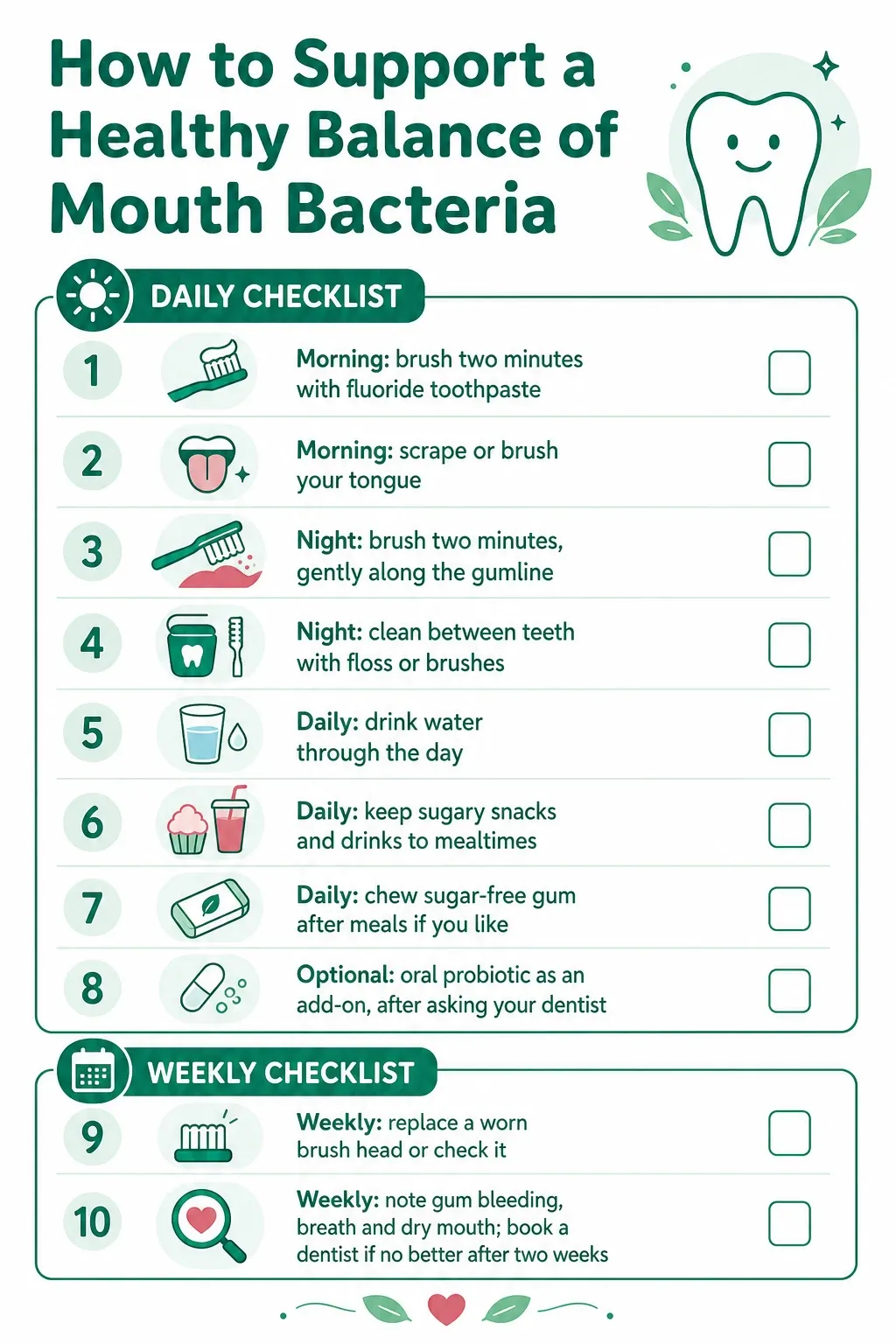
When to see a dentist
See a dentist if gums bleed for more than two weeks, teeth feel loose, or bad breath doesn’t improve with good care. Persistent symptoms can have causes brushing can’t fix.
How does this connect to the bigger picture of mouth bacteria?
Balancing mouth bacteria is about daily habits that keep plaque in check. For the full picture of what lives in your mouth, read mouth bacteria and the oral microbiome.
If bad breath is your main worry, see persistent bad breath steps. For gum questions, probiotics for gum health covers what is known.
Frequently asked questions
How long does it take to improve mouth bacteria?
Fresher breath can come within days of steady brushing, cleaning between teeth and tongue care. Gum improvement often takes a couple of weeks. Balance shifts over weeks, not overnight. If bleeding or odor persists beyond that, see a dentist.
Is baking soda good for mouth bacteria?
Baking soda toothpaste can help clean teeth gently and neutralize acid, but it’s no replacement for fluoride toothpaste. Don’t scrub hard with plain powder, which can wear enamel. Ask your dentist if you’re unsure.
Does an electric toothbrush help?
An electric toothbrush can make it easier to brush for the full two minutes with steady, gentle pressure. What matters most is thorough, regular cleaning along the gumline, so a manual brush used well works too.